


Client Story - Heather
A Bristol client's trichotillomania journey with Lucinda Ellery
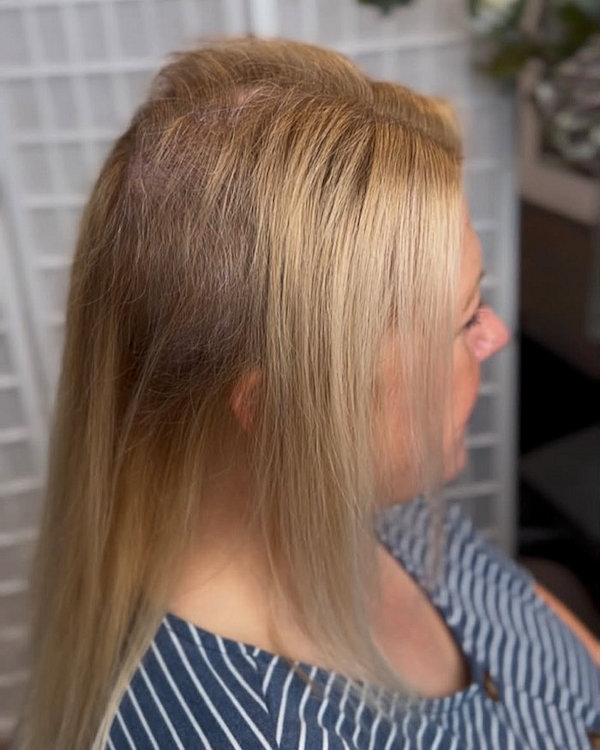
Heather before Intralace

Heather after Intralace
It started so quietly, just a nervous habit when I was a little girl - a way to soothe myself that I didn't understand. But as the years turned into decades, that quiet habit became a loud, persistent shadow. By my late 30s, trichotillomania wasn't just something I dealt with; it was the invisible architect of my daily life.
My hair was my shield. I became an expert in the art of the "up-do." Every morning was a meticulous negotiation with bobby pins, and strategic teasing, trying to cover the thinning patches and the areas where the hair just wouldn't grow back. I lived in constant fear of a strong gust of wind, people noticing my thinning hair from behind and my daughter seeing my patches. My confidence was tethered to how well I could construct that illusion. I felt like a fraud, constantly worried that if someone looked too closely, they would see the struggle I was hiding.
Years ago, I remember sitting on my sofa, watching a documentary on television about Lucinda Ellery. I watched, mesmerised, as she transformed the lives of women who had felt just as broken as I did. It felt like a lifeline, but one that was dangling just out of reach. Back then, the cost felt impossible, and more than that, I didn't have the courage to walk through those doors. I was afraid that by admitting I needed help, I was admitting I had failed. So, I went back to my pins and my updos, letting the secret grow heavier with every passing year.
But something shifted recently. I got tired of being afraid. I started putting money aside, treating it like a sacred investment in my own future. It took time, but eventually, I finally booked the appointment.
Walking into the salon, I felt nervous. The team at Lucinda Ellery didn't look at me with judgment; they looked at me with understanding. They knew the weight I had been carrying. When they finished, and I looked in the mirror, I didn't just see hair - I saw me again. I saw the person I had been trying to protect for thirty years.
The first time I walked out with my hair down, the world felt different. I wasn't constantly checking my reflection or adjusting my pins. And then, the compliments started. People would tell me how lovely my hair looked, how healthy and natural it was. Every time someone says it, I feel a surge of warmth—not just because of the hair, but because I'm finally living without the secret.
For the first time in my life, I'm not hiding. I'm just here, present and confident, and for that, I am so incredibly grateful.
Lucinda Ellery Comments
Thank you, Heather. Putting thirty years of pulling into writing under your own name takes real courage.
We know how difficult it is to live with Trichotillomania. Most women who come to us have built the same defences Heather describes, the up-dos, the pins, the strategic teasing, the dread of a strong gust of wind or of being seen from behind. It's exhausting, and it's lonely, because so few women ever get to say it out loud.
Heather watched a Lucinda Ellery documentary years before she came to us and didn't come, mostly because she was afraid that asking for help meant admitting she'd failed. Nobody here thinks that. Talking therapies can help you overcome your Trichotillomania, but they can't do anything about the hair you've already lost.
The Intralace does something different. It's integrated into your natural hair through an ultra-fine mesh that stops you being able to reach the roots, so you can't pull while it's there, and your own hair carries on growing underneath. There's no need to shave your head, and you look great without the endless hours spent covering up the patches. You feel more relaxed, and your hair gets a chance to recover. For a lot of women, that breathing space is what finally breaks the habit.
In our Bristol studio you'll find an empathetic and experienced team who genuinely understand Trich, and we'll never judge you for a setback.
Whether you're pulling yourself or you're reading this for your daughter, you can talk to us in confidence.
The first consultation is free so you can come and get a feel for what we can do for you. Or if you prefer we can have a video consultation instead.
To contact us about an appointment or get more information see the Bristol Contact page where you can send us an enquiry or give us a call.
For details of our location and directions for getting there see our Bristol Directions page.
For further information on Trich visit our Trichotillomania pages including the before and after gallery.
Follow Us

