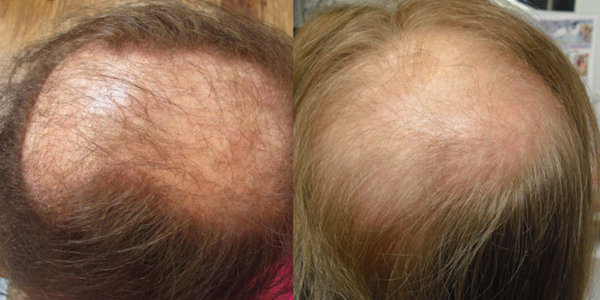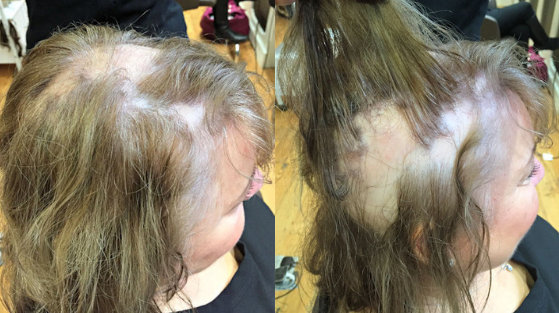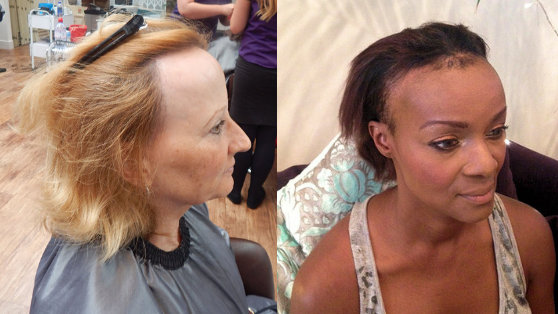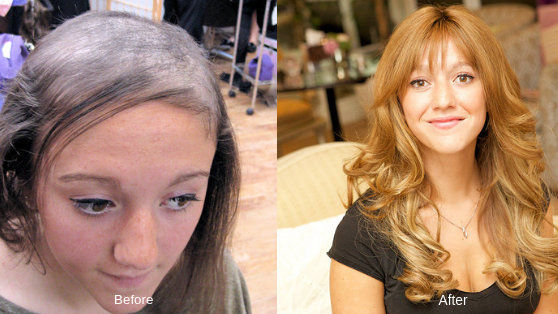
Trichotillomania is a body-focused, impulse control disorder which inevitable leads to some degree of hair loss for the sufferer.
Due to its psychological origins, however, the impact of trichotillomania is far more than just physical. It can be extremely distressing for the person with the condition, as well as making them feel so ashamed and embarrassed of their behaviour that they are afraid to tell anyone what is happening. This can lead to problems in getting a formal diagnosis of the condition.
Once trichotillomania has finally been accurately diagnosed, it is then time to think about treatment. Trichotillomania in children tends to resolve itself given time, but a doctor should be consulted if it persists.
For adults, there are a few options available, although the sufferer will need to be patient and cooperative to see results.
The following approaches have shown limited effectiveness in improving symptoms of trichotillomania, but it is important to remember that there is no ‘magic’ cure. You can try:
• Habit reversal training (HRT)
• Cognitive behavioural therapy
• Hypnosis
• Medication such as Acetylcysteine and Inositol
For an increased chance of successful treatment of trichotillomania, it is recommended to try combining medication-based treatment with behavioural therapy methods.
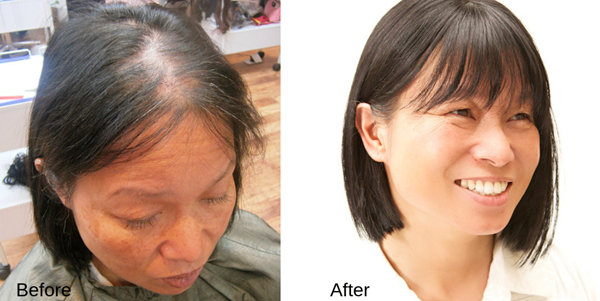
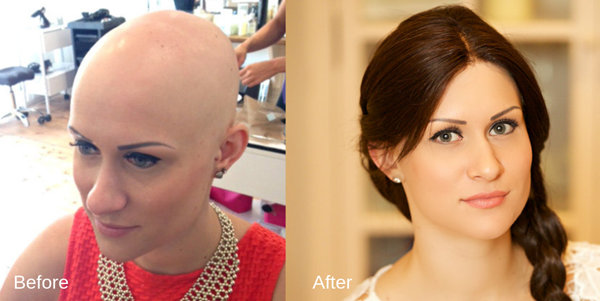
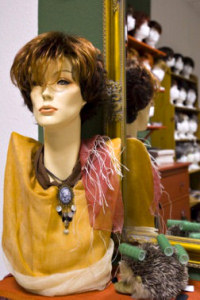
There are many more solutions and options available for women with hair loss than ever before, including medication, hair replacement systems and human hair wigs. However, some people choose to take the surgical route.
The most commonly used surgical procedures for hair loss include:
Hair transplantation
This is where tiny ‘punch-holes’ of skin containing hair follicles are taken from donor areas such as the back of the head. These follicles are then implanted into areas where hair has fallen out or is thinning. This technique is mainly used for men with receding hairlines or women with bald patches, but it is not believed to be very effective on women with diffuse hair loss all over the scalp.
Scalp reduction
This procedure is mainly used to treat men with a receding hairline, but it can be used for female patients. It works by stretching areas of the scalp where hair is still present and removing bald areas of skin.
Whilst these techniques have improved a huge amount in recent years and are now quicker, more convenient and less painful, you should still carefully consider your options before choosing surgery.
Minoxidil is one of the most commonly used treatments for hair loss in women and men, and it is widely available in various forms all over the world.
The drug was originally used to treat high blood pressure, but was found to have the side-effect of increasing hair growth and thickening hair in some of the people who took it. It is now available over the counter as a lotion, under brand names including Regaine, Rogaine, Mintop, Loniten and Avacor.
Unfortunately, the exact way in which minoxidil works to restore hair and promote re-growth is not definitively known. However, it has been shown to have visible effects in some patients.
How well does it work?
Studies have shown that minoxidil is effective at producing moderate regrowth in around 20 per cent of women aged between 18 and 45. A further 40 per cent of this age and gender group reported minimal regrowth.
Will the effects of minoxidil last?
Whilst minoxidil has proven to be effective for some people, its visible results tend to disappear within months of stopping treatment. Therefore, it needs to be used indefinitely until the hair can grow back by itself.
There are many different things you can try to treat hair loss, including medication, hair replacement and cosmetic solutions to disguise bald patches or thinning hair. Some people choose hair transplantation surgery as a viable option for improving the appearance of their hair.
Hair transplantation surgery has come an awfully long way in the last few years. The procedure used to be incredibly painful and take a long time to heal, with fairly unnatural-looking results. However, there are many new procedures available nowadays which produce very natural results with the minimum of pain, discomfort and inconvenience.
One of these new methods is Follicular Unit Transplantation, a refined and minimally invasive procedure in which stereoscopic dissecting microscopes are used to restore hair to all areas of the scalp. It can even be used to improve the appearance of eyebrows and eyelashes, beards and pubic hair.
How it works
Hair roots are taken from donor areas (usually at the back or sides of the scalp) and placed in balding or thinning areas of the scalp. The transferred hairs are placed at the same angle and in the same direction of the rest of the hair, so that the results are realistic. The procedure takes between 2 and 8 hours to complete, and patients can usually head home within around 30 minutes of finishing treatment.
One of the reasons that the Internet is literally jam-packed with ‘miracle’ hair loss pills, injections, creams and other products is that people with hair loss are usually desperate for a cure.
A lot of hair loss sufferers wish their hair would stop shedding and grow back, so that they can resume their ‘normal’ lives. Opportunistic businesses and individuals seek to capitalise on this by offering hair loss cures, which unfortunately hardly ever work.
The only reliable way to get proper treatment for hair loss is to visit your GP, dermatologist or hair loss specialist (also known as a trichologist), who will recommend or diagnose treatments known to have shown some effectiveness in other patients.
When undergoing any of these treatments, however, it is absolutely vital that you try to maintain realistic expectations on the outcome of the treatment. Hair loss is a very emotional condition, so it can be devastating if you build yourself up to believe you will quickly regain a thick, full head of hair only to see little or no results.
Some hair loss treatments may slow shedding, encourage a little regrowth or slightly improve the appearance of hair. Some may do nothing at all. As far as research has shown, no treatment has yet been developed that will offer a ‘miracle’ cure for hair loss.
A report published by the online publisher of peer-reviewed science, PLoS One, suggests the accidental discovery of a link between a chemical compound that can reverse and prevent alopecia in mice.
The team was investigating the effects of stress on gastrointestinal functions in mice, but have found that mice exposed to chronic stress and suffering from alopecia showed significant improvements when injected with astressin-B. It was found that a daily injection over a period of five days ‘induced pigmentation and hair re-growth that was largely retained for over 4 months.’ As mice generally live for less than two years, this represents relatively long-term hair growth.
Stress is recognised as a potential cause of hair-loss in humans, but the implications here in the case of the mice are that the compound astressin-B may block CRF (Corticotropin-releasing factor), which has been linked to hair growth inhibition in chronically stressed individuals. The report also suggests that the regular administration over a short period of time actually ‘revived the hair follicle’.
Whilst this accidental discovery has still only been observed in mice, it has been suggested that a similar approach to hair loss treatment could be tried on humans at some point in the future.
Although there are many genuine sources of help out there for women with hair loss, there are unfortunately just as many individuals, companies and websites looking to exploit desperate people by offering ‘miracle cures’.
The truth is that a huge amount of these products and techniques simply don’t work, promising lightning-speed regrowth of hair which just doesn’t happen. The people who sell these products aren’t usually trained or experienced hair loss specialists; they are solely interested in making money by taking advantage of your desperation and desire to regrow your lost hair.
If you want proper treatment for your hair loss condition, you need to go to a medical professional rather than wasting your money on these so-called ‘miracle cures’. See your GP for a formal diagnosis, then visit a dermatologist or trichologist (hair loss and growth specialist) for a further consultation and treatment options.
You can also look for hair management and replacement options, from organisations with actual experience of treating female hair loss. Use a reputable company known for its expertise, knowledge and sensitivity, and spend your money wisely on hair loss solutions that actually work.
Once you have been diagnosed with female hair loss, the next step is to find a treatment that works for you. There are many options available nowadays, from medication and surgical procedures to more natural hair replacement techniques.
In terms of medication for hair loss, you may be prescribed:
• Minoxidil (also known by the brand name Regaine)
This is one of the most commonly used non-prescription medications for female hair loss, particularly the condition known as alopecia areata. It comes in the form of a foam or liquid that you frequently rub into the scalp. Around 30-40 per cent of people using minoxidil experience some form of regrowth, although any improvement can take up to 12 months to become noticeable.
• Corticosteroids
This medication, often used to treat alopecia areata, comes in the form of injections or oral pills. Results can take up to a month or more to be noticeable, depending of course on the patient and the condition.
• Hormonal modulators
These come in the form of oral contraceptives or something called spironolactone and is often used to treat androgenic alopecia (female pattern hair loss) associated with hyperandrogenemia.
A new device designed to reduce hair loss during chemotherapy treatment for cancer has been successfully tested and approved for use in Europe, as well as in Canada and Japan.
The Dignicap system has been developed by a Swedish firm called Dignitana, who claim that the cap is able to limit hair loss for cancer patients undergoing chemotherapy.
The cap, consisting of a form-fitted silicon cap, a mobile cooling unit and a neoprene outer cap to keep everything in place, works by chilling the scalp and shrinking the blood vessels. This reduces the dose of chemotherapy that reaches the hair follicles, thereby limiting hair loss whilst still allowing the treatment to work properly.
The Dignicap system has not yet been FDA approved in the USA, but it is in clinical use in some other parts of the world. Trials have shown a number of positive results; namely, that the cap helps to decrease hair loss during chemotherapy, is safe to use and is well-tolerated by patients.
Susan Melin, breast cancer specialist and Wake Forest Baptist associate professor of internal medicine-haematology and oncology, commented on the device, saying:
“One of the first questions my patients ask is whether they will lose their hair with the chemotherapy recommended for their breast cancer.
“Preventing chemotherapy-induced hair loss by using the scalp cooling cap may relieve severe psychological and emotional stress and improve the patient’s quality of life.”
Researchers at the University of California in Los Angeles have inadvertently happened upon what might prove to be quite a promising treatment for hair loss.
The team was looking into stress hormones, conducting experiments on mice that went bald when they overproduced a particular stress hormone. The mice were then treated with astressin-B to see if this would prevent the effects of stress on their colons. The mice were then put in cages with unaffected mice and it was found that the bald ones once again sprouted fur.
Repeating the experiment several times, the same results were seen and mice injected with astressin-B before they lost fur in the first place never actually went bald at all. From this, it has been hypothesised that the compound may be able to prevent some forms of hair loss as well as promote growth.
However, set against this was the fact that the mice experienced slight pigmentation changes as well, which means that any treatment based on use of astressin-B could lead to changes in hair colour.
Speaking about the findings so far, research leader Dr Million Mulugeta said:
“The antagonist really triggers a mechanism that covers a lot of biological phenomena, including hair growth and hair colour. We certainly intend to continue the research.’’