September 5, 2010

Seeing the doctor about your hair loss

Filed under: Hair Loss General — catherine @ 7:46 am

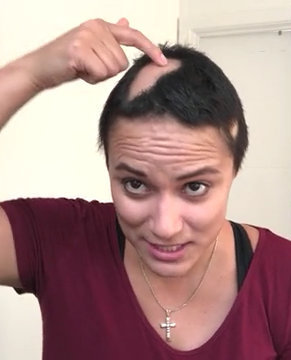
If you are going through a stressful time in your life that has resulted in the loss of some or all of your hair, you don’t need to worry, as it happens to many women during certain times in their lives. Everyone handles stress differently and it can be a hard thing to come to terms with when you are putting yourself through a lot at work or something is going on at home. Some women feel like they can’t go to the doctor because hair loss isn’t something that should happen to women, but you definitely need to see your doctor in order to get a formal diagnosis.

Having a formal diagnosis of your hair loss condition will ensure that you are getting the right kind of treatment for your hair loss and to ensure that there is nothing else seriously wrong with you that might be causing your hair loss. Your doctor will be able to put you on the right medication if there is any for your particular type of hair loss and advise you on other things that you can do such as reducing the amount of stress you are under or improving your home life situation.

September 3, 2010

What is telogen effluvium?

Filed under: Hair Loss General — catherine @ 9:00 pm

One of the most common forms of hair loss seen amongst women of all ages is telogen effluvium. Most women who suffer with this particular type of hair loss find that their hair will normally grow back over a period of time, however this can still be a distressing time for any woman and they still find it difficult coming to terms with the fact that they have lost some or all of their hair.

Telogen effluvium occurs when a woman experience sudden or severe stress which in return causes an increase in the amount of hair that is shred from the hair. We all lose hair on a daily basis but it is a very minimal amount and usually it goes unnoticed. However, the sudden or severe episode of stress causes hair follicles to stop growing and enter into a resting phase.

The good news is that this condition is temporary for most people who suffer from it however it does mean that you need to take it easy and ensure that you are not putting yourself through any unnecessary stress. It has been found that some women who have gone through a stressful pregnancy and labour suffer from telogen effluvium.

Don’t deal with it on your own

Filed under: Hair Loss General — catherine @ 5:00 pm

Hair loss is not something that you need to deal with on your own without any help but there are many avenues in which to explore in order to ensure that you deal with your hair loss issues and either prevents it reoccurring or cure it completely. There are many places that you can go to for advice as well as places where you can receive treatment for your hair loss.

Hair loss in women in particularly common, especially amongst women of a certain age. There have been studies conducted which believe that the hormone change involved with the menopause can cause some women to lose their hair. However, some hair loss is only temporary and can often be a result of putting yourself under a lot of stress. This can easily be remedied and your doctor can provide you with helpful advice and guidance to assist you in managing your work live balance and reducing the amount of stress in your life.

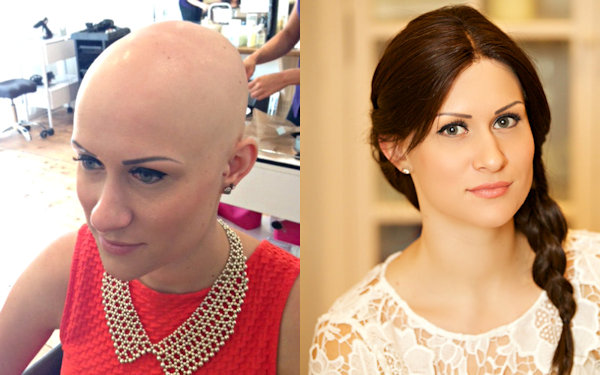
However, for others, it can be a more permanent fixture, and coping on a daily basis with hair loss can be very difficult. But you shouldn’t ever think that you are on your own as there are many alternatives such as wearing a wig which could significantly boost your confidence.

September 2, 2010

The link between alopecia and stress

Filed under: Hair Loss General — catherine @ 8:09 pm

Stress is often mentioned as playing a part in various autoimmune disorders, such as alopecia areata. However, experimentation is ongoing to try and establish the connection.

It is thought that the nerves in the scalp as well as various products of the nervous system could interrupt the cycle of hair growth. Substance P is a brain chemical and it is thought that this could be released from nerves near hair follicles when they are inflamed.

There is some evidence that this could affect the growth of hair. Substance P encouraged hair growth in mice when follicles were in the resting phase, but when follicles were in the growth phase, the same chemical encouraged them to convert to the intermediate catagen phase.

Similarly, capsaicin, a pain relieving cream, has been known to work for some people suffering with alopecia. This cream releases substance P among other things.

This evidence supports the notion that nerves around hair follicles affect growth, but more studies need to be carried out. The important thing to remember is that hair loss has many potential causes and it is unwise to assume anything without first consulting a doctor or dermatologist.

Large majority of women suffer hair loss

Filed under: Hair Loss General — catherine @ 7:02 pm

You might have never thought it would happen to you but you have started losing your hair and you don’t know where to turn to for some advice. You don’t want to go to the doctor because you are frightened about what they might say and the internet is telling you some horror stories about other women who have lost their hair. In actual fact, you are best talking to your doctor and getting some professional advice about what is happening to your hair.

You will find that you are not alone when it comes to hair loss. Many women across the country lose their hair and some women have publicised the fact that they have lost their hair. It can be a difficult time because most women find it hard to comprehend what is happening to you.

According to medical reports, almost 40% of all women over the age of 60 experience some form of hair loss. This is a staggering figure and you probably wouldn’t have even noticed that some of the women that you know have had problems with hair loss. Some of these women will have been treated for their hair loss whereas some hair loss unfortunately is permanent.

September 1, 2010

The most common form of hair loss

Filed under: Hair Loss General — catherine @ 8:47 pm

There are many different types of hair loss and it is worth getting your head around the different types of hair loss and the reasons why women lose their hair so that you can start to understand what is happening to you.

The most common form of hair loss amongst both men and women is called telogen effluvium. This is when the hair all over the body is lost, not just their hair that appears on your head. It can occur to absolutely anybody and it can occur at any time during your life so it doesn’t matter whether you are young or old or male or female, it could happen to you.

However, you don’t have to start panicking just yet; it generally occurs as a result of intense stress to both your body and for some it can become a very severe problem. In women in particular it is believed that those who are overanxious or overstressed are susceptible to this condition. The hair typically thins rather than goes completely bald but there is some hope on the horizon, it does get better with time and by reducing the amount of stress and anxiety that you put yourself through.

August 25, 2010

Examining the link between female hair loss and diet

Filed under: Hair Loss General — catherine @ 5:25 pm

Sadly, there is no miracle cure for female hair loss, nor is there one particular type of food you can eat to either prevent hair loss or cause hair to grow back. The best way to find a solution to your problem is to consult your GP or a hair loss specialist.

However, there is a link between some aspects of female hair loss and the sufferer’s nutritional intake. Whilst permanent hair loss is usually caused by genetic disposition, temporary loss or thinning of hair can be affected by nutritional deficiencies.

The following is a brief outline of the vitamins involved in hair growth and loss:

Vitamin A – You need a sufficient intake of Vitamin A to promote the growth of healthy hair and scalp tissues. A prolonged deficiency can cause cellular debris to accumulate in the hair follicles, resulting in hair loss.

Zinc – A mineral which promotes cell reproduction, tissue growth and repair, Zinc deficiency has often been associated with dandruff and hair loss.

Vitamin B6, vitamin B12, folic acid – These B Vitamins are essential for ensuring that your scalp receives enough blood and oxygen to keep it healthy and strong. A deficiency could cause shedding or thinning hair, as well as slow regrowth.

Other vitamins and minerals associated with hair growth and loss include: iron, Vitamin C, copper, and protein.

Female hair loss after pregnancy: why does it happen?

Filed under: Hair Loss General, Hair Managment options — catherine @ 1:02 pm

Many women notice changes to their body after pregnancy, one of the most upsetting being hair loss. But what causes this to happen, and what solutions are available to treat your hair loss problem?

Causes of post-pregnancy hair loss

At any one time, around 90 per cent of your hair is in the ‘growing’ phase whilst 10 per cent is in the ‘resting’ phase. This ‘resting’ hair falls out every few months, allowing new hair to grow in its place.

The hormonal changes that occur during pregnancy can disrupt this cycle, causing more hair than normal to simultaneously enter the ‘resting’ phase. This is called telogen effluvium, and it usually occurs a few months after giving birth in around 40-50 per cent of women.

Solutions

Like many other changes that take place during pregnancy, this type of female hair loss is generally temporary. Although you may notice thinning or light shedding, the condition of your hair should improve approximately 3-5 months after giving birth as the hormone levels start to return to normal.

However, this condition can be extremely distressing for women, especially if you have the stress of being a new mother to contend with as well. This is why hair loss specialists have developed a number of interim, such as human hair wigs.

August 24, 2010

Coping with the side effects of chemotherapy

Filed under: Hair Loss General, Hair Managment options — catherine @ 3:03 pm

Although nothing can be quite as devastating as cancer, some of the side effects of cancer treatment can be fairly traumatic. For women, this means hair loss.

Chemotherapy treatment attacks all rapidly-dividing cells, regardless of whether they are healthy or not. As hair follicles grow so fast, these are amongst the first to be depleted. This results in rapid shedding of the hair, at a rate that can be alarming and upsetting to the patient.

Losing all your hair at once can be a frightening and debilitating experience, especially for women living in a world that sees thick, healthy hair as a sign of youth and beauty. Breast cancer charity founder and radiation oncologist Marisa Weiss elaborates on this, saying:

“There are studies that show that for many women, losing their hair is worse than losing a breast. That’s because you can conceal the loss of a breast, but hair loss is so obvious and apparent,”

Preparing for hair loss caused by chemotherapy

The best defence against the rapid hair loss caused by chemotherapy is to prepare for it ahead of time. It generally happens to everyone who undergoes the aggressive treatment, but you needn’t let it come as a shock.

But what are your options? Some women choose to take back control of the situation and shave their heads before their hair can fall out, whilst others prepare to use headscarves and other head coverings. One of the best options, however, is human hair wigs, which can now be made to look as realistic as your original hair. Consult a hair loss clinic or human hair wig specialist to find out more.

August 23, 2010

UK’s first alopecia camp in Scarborough a success

Filed under: Hair Loss General, Hair Loss in the News — catherine @ 4:16 pm

Three million people in Britain are currently affected by alopecia but for some reason, the condition still has a stigma attached to it. This is especially the case for women and children, as hair loss is more commonly seen in men.

This is why the Bebold Support Group and Alopecia Awareness teamed up to open the UK’s first alopecia camp, which has now been heralded a success after its July 30th open day. Alopecia sufferers from all over the country were invited to visit the camp for a week and spend time with others who have the same condition.

The psychological effects of sudden hair loss can be devastating, which is why alopecia sufferers need the kind of support and understanding offered at the Scarborough camp.

Michelle Chapman, a childhood alopecia sufferer and member of Alopecia Awareness, has spoken of her own experiences and what the camp means to alopecia sufferers and their families. She said:

“If I’d had the chance to meet others living with hair loss, it would have made a huge positive difference to me and my family. Instead, I felt as if I was the only bald girl in the world.

“These children and adults will have the chance to spend time with people who truly understand and never feel as alone and embarrassed as I did.”