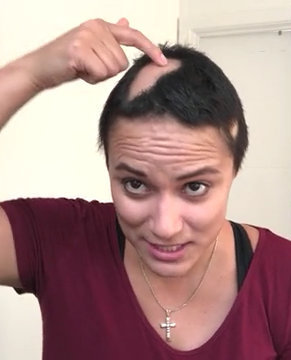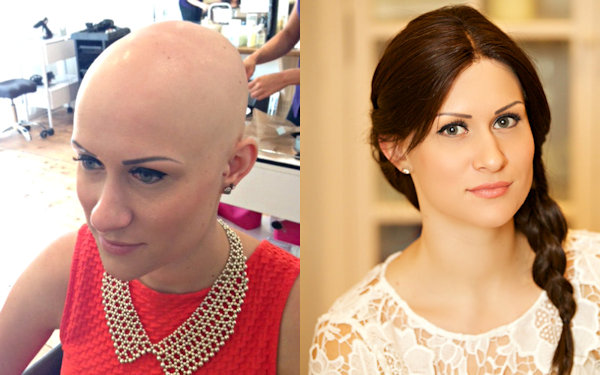
Alopecia mucinosa, or follicular mucinosis, is a hair loss condition found in three main types. The primary and acute (Pinkus) variety occurs in children and adolescents, the primary and chronic disorder is often found in people over 40 years of age, whilst the secondary disorder affects people with an existing skin disease.
What does it look like?
The condition shows itself through the appearance of mucin, a stringy clear or whitish substance, around hair follicles. You can only really see this by using a microscope. Other noticeable signs of alopecia mucinosa include red plaques on the skin and patchy hair loss.
What causes it?
Whilst the definitive cause of alopecia mucinosa is not yet known, it is believed to be related to the immune system in some way. This is similar to other hair loss conditions such as alopecia areata and telogen effluvium.
Is there treatment available?
Alopecia mucinosa in children often clears up on its own, and hair will grow back once it does so. For cases involving adults, treatments which have shown a degree of success include corticosteroids, oral antibiotics (i.e. minocycline) and photochemotherapy (PUVA).
Nearly one year on from learning that she had breast cancer, singer and actress Bernie Nolan is now well on the way to recovery. She recently showed off a new head of healthy-looking hair, after losing it all during chemotherapy treatment.
Nolan, who is best known as the lead vocalist of The Nolans and also for her role as Diane Murray in Brookside, was diagnosed with cancer in April 2010. The 51-year-old underwent a gruelling course of chemotherapy and had a mastectomy, finally declaring in October 2010 that she was cancer-free.
After losing patches of hair during chemotherapy, Nolan made the brave decision to shave her head. Speaking of this moment, she said:
“I thought, “Get rid of it – I’m in charge of this disease, it’s not in charge of me.”‘
The Popstar to Operastar runner-up was spotted just a few months ago with the first signs of hair regrowth on her scalp, and now has grown a thick crop of healthy blonde hair. She looks healthier than ever, and has gone back to work promoting her new book ‘Survivors: Our Story – From Us to You With Love’ alongside her supportive sisters.
Trichotillomania is a body-focused, impulse control disorder which inevitable leads to some degree of hair loss for the sufferer.
Due to its psychological origins, however, the impact of trichotillomania is far more than just physical. It can be extremely distressing for the person with the condition, as well as making them feel so ashamed and embarrassed of their behaviour that they are afraid to tell anyone what is happening. This can lead to problems in getting a formal diagnosis of the condition.
Once trichotillomania has finally been accurately diagnosed, it is then time to think about treatment. Trichotillomania in children tends to resolve itself given time, but a doctor should be consulted if it persists.
For adults, there are a few options available, although the sufferer will need to be patient and cooperative to see results.
The following approaches have shown limited effectiveness in improving symptoms of trichotillomania, but it is important to remember that there is no ‘magic’ cure. You can try:
• Habit reversal training (HRT)
• Cognitive behavioural therapy
• Hypnosis
• Medication such as Acetylcysteine and Inositol
For an increased chance of successful treatment of trichotillomania, it is recommended to try combining medication-based treatment with behavioural therapy methods.
A lack of nutrients in your diet can cause a range of medical effects on the body, including hair loss. The most serious examples of this kind of dietary deficiency can be seen in people with eating disorders and those on extreme weight loss plans. However, your health and your hair can also be at risk from an excess of certain vitamins and minerals, as well as a deficiency.
Excessive intake of vitamin A can cause a condition known as Hypervitaminosis A, which specifically refers to the class of chemical compounds called retinoids. These retinoids have a number of functions within the body, with roles in everything from bone tissue growth and immune function to vision and the regulation of cell proliferation and differentiation.
If you take too much vitamin A and the liver’s stores of retinoids are exceeded, you could face systemic toxicity. This can cause the following effects:
• Liver problems
• Skin discolouration
• Excessive skin peeling/dryness
• Nausea and vomiting
• Headache, dizziness and blurred vision
• Loss of muscular coordination
• Course bone growths
• Reduced bone mineral density
• Hair loss
If you suspect you have Hypervitaminosis A, it is important to make an appointment to see your GP to get a formal diagnosis and treatment.
Last Sunday’s final of Dancing On Ice was won in spectacular style by EastEnders’ actor Sam Attwater, but it was Australian judge Jason Gardiner who was the talk of the evening.
Gardiner, 39, is best known for his acid-tongued criticism and occasionally offensive remarks as a judge on the Dancing On Ice panel, as well as wearing a hat or a cap nearly all of the time.
However, the judge was so impressed by contestant Laura Hamilton’s performance during the finale that he raised his hat to her, revealing in the process the impressive results of his hair transplant.
After years of torment after losing his hair, Gardiner made the decision to undergo a hair transplant procedure costing around £12,000. Specialist doctors transplanted over 3,000 follicles from a donor area at the back of his head to the top, front and sides.
Gardiner has now spoken out about what it felt like to be plagued by baldness all those years, saying:
“I went through self-doubt, depression and self-loathing. I was ashamed of myself. I couldn’t be intimate with people. It was suffocating me.”
“It was important for me to get this [the transplant] done. I feel so great about how this looks.”
The mother of a boy with alopecia universalis is on a mission to raise awareness of the condition, even going so far as shaving her head in a fundraising effort.
Daniel Jones, who is now seven, started to lose his hair around two years ago. Doctors believed the hair loss condition was triggered by the stress and emotional upheaval of Daniel’s grandfather passing away and his grandmother having a heart attack. The two incidents occurred within just two months of each other, which must have put a big strain on the Jones family.
Daniel has now come to terms with his distressing condition, and his mother Kellie is on a campaign to raise awareness and support for people like him who have alopecia. Speaking to the local newspaper, the 32-year-old said:
“My son was very close to my dad and is to my mum. He developed a couple of round bald patches at the back of his head so he was referred to a dermatologist who said it was alopecia.
“But while waiting for his next appointment, Daniel’s hair rapidly fell out including his eyebrows and eyelashes. The consultant said he had alopecia universalis and his hair wouldn’t grow back.”
Alopecia universalis is a condition in which the sufferer loses all hair all over the body.
Several advice centres have been set up in North Wales for patients who are suffering hair loss as a result of cancer treatment. While the cancer itself is clearly the primary concern in these situations, the mental effects of hair loss should not be underestimated. In an already traumatic time, problems can be compounded with many people’s confidence badly affected.
The advice centres will make use of volunteers, including former patients.
Linda McCarthy, head of Breast Cancer Care Cymru, said:
“For many women, the thought of losing their hair can be worse than the idea of having surgery.
“Hair loss can make people feel very vulnerable, so it’s wonderful to be able to offer a service that can help boost confidence and make women feel better about how they look.”
One volunteer, Iona Roberts, describes how losing her hair during breast cancer treatment made her fear that she would frighten her grandson. She wore a wig until her hair regrew, but there are many other ways of managing hair loss these days.
The Intralace System is popular as it allows for the creation of a full head of hair via as little as 1.5 inches of regrowth.
Losing hair can prove distressing, but it’s important to remember that it is perfectly normal to lose a certain amount. We generally lose around 100-150 strands a day so a little bit on your pillow or in your hair brush is no cause for alarm.
Beyond that, there may be a problem and there are many possible reasons why a person might lose hair. One common reason is pattern hair loss. This is where hair becomes thinner after puberty and it results from hair roots narrowing.
Environmental factors can play a part too, such as diet, stress and treatments such as rebonding and hair colouring, as can deficiencies in certain vitamins and minerals. A lack of vitamin B, zinc or iron could potentially result in hair loss.
Many who suffer hair loss have a genetic predisposition towards doing so and this may be linked to hormonal changes at certain stages of life, such as following childbirth. Illnesses can also bring about a spell of hair loss, as can certain medications.
If you are concerned about the amount of hair which you are losing, the first thing to do is to go and see your doctor. If they cannot diagnose the cause themselves, they will refer you to a dermatologist who should be able to do so. Determining the cause is the first step towards finding a potential cure.
Hair loss has many different causes and while many are simply unavoidable, others can be addressed with simple measures. You may not even be aware that certain things could eventually result in loss of hair. Here are a few tips that could help ensure you retain your hair.
1. Using hair conditioner can help protect hair shafts.
2. Eating a balanced diet is always advisable as lack of nutrients can affect hair growth, as can dieting.
3. Avoiding chemical procedures or leaving a suitable rest period between them is advisable. Leave six months between hair rebondings and a month between colourings.
4. Vitamin B, zinc and iron supplements could help preserve your hair as deficiencies of these can result in loss of hair.
5. Head massages can promote blood circulation which aids hair growth, soothing nerves and relaxing muscles.
6. Excessive blow drying can damage hair.
7. Try and combat stress wherever possible as this is often a cause for hair loss.
If you do find that you are losing hair, consult your GP. With so many possible causes, correct diagnosis is vital in order to properly treat the problem.
A large number of medications have unwanted side effects, however effective they may be at treating and curing medical conditions. One of the most unwelcome of these side effects, particularly in women, is hair loss.
What medications can cause hair loss?
If you take any of the following medications, you may experience hair loss or thinning hair.
• Antibiotics
• Antifungal medications
• Interferons
• Chemotherapy medication
• Anticoagulants (blood thinners)
• Antidepressants
• Anticonvulsants (for epilepsy)
• Medication for lowering cholesterol or blood pressure
• Steroids
• Acne medication
• Hormone replacement therapy
• Thyroid medications
• Oral contraceptives
• Immunosuppressant medications
• Mood stabilisers
• NSAIDS (non-steroidal anti-inflammatory medication)
• Medications for Parkinson’s disease
Remember though – medication affects different people in different ways, often depending on the dosage and type of medication taken and the person’s sensitivity to it.
What can I do about drug-induced hair loss?
The good news for people experiencing hair loss caused by medication is that it tends to be temporary and will hopefully improve once you stop taking the medication. You should see your doctor as soon as you notice any problems with hair loss, whether you have started a new course of medical treatment or not.